


Leitfaden für Herrenanzüge
Bei einem tollen Anzug geht es weniger um steife Formalität, sondern vielmehr darum, wie man sich darin fühlt – selbstbewusst, mühelos und rundum wohl. Dieser Leitfaden ist Ihr Wegweiser, um Ihre Favoritenanzüge zu finden, zu stylen und zu pflegen.
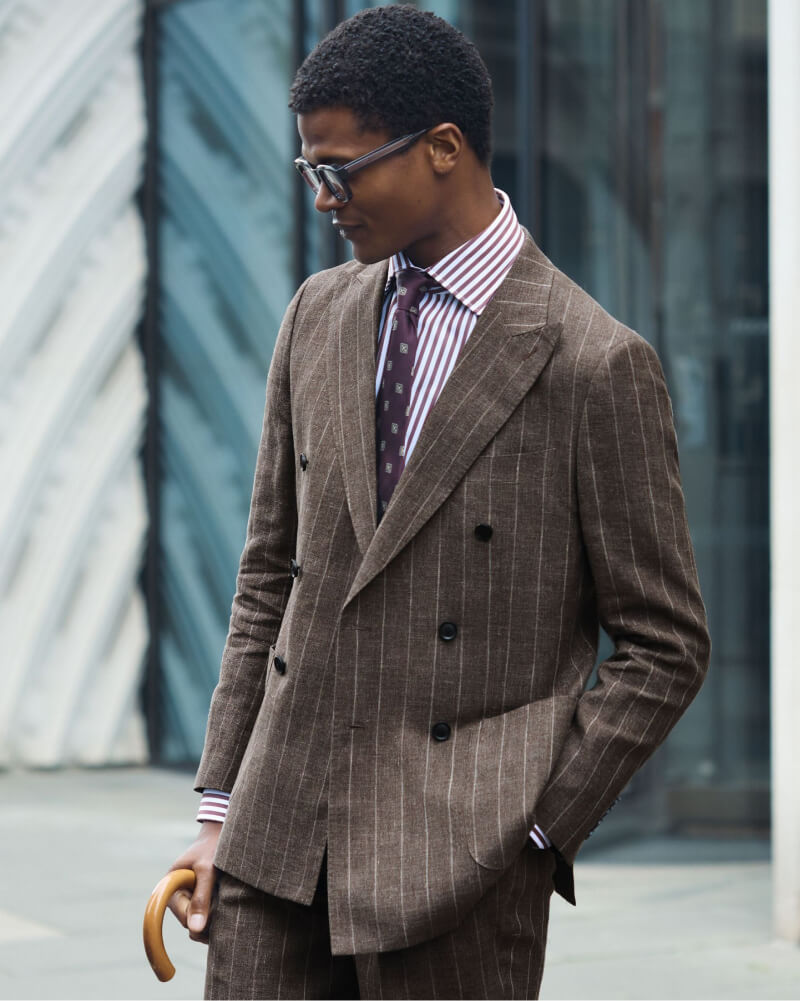
SO MASSE MAN EINEN HERRENANZUG
Die perfekte Passform beginnt mit einigen präzisen Messungen, die Sie ganz einfach zu Home mit einem flexiblen Maßband vornehmen können.
Die Brust
Wickeln Sie das Maßband um die vollste Stelle Ihrer Brust, halten Sie es horizontal und lassen Sie genügend Platz für einen Finger dazwischen, um Luft zum Atmen zu schaffen.
Die Schultern
Messen Sie Ihre Schultern von der äußeren Kante eines Bone gerade über Ihren Rücken zur anderen Schulter, wobei das Maßband flach anliegen sollte.
Die Ärmel
Messen Sie von der Stelle, an der Ihre Schulter auf Ihren Arm trifft, bis zum Handgelenk-Bone – so ist sichergestellt, dass ein Hauch der Hemdenmanschette sichtbar bleibt.
Die Taille
Finden Sie Ihre natürliche Taille an der Stelle, an der Ihre Hose normalerweise sitzt, um eine bequeme und nicht einengende Passform zu gewährleisten.
Innennaht
Um Ihre Beinlänge zu ermitteln, messen Sie von der Schrittnaht bis zur Stelle, an der der Stoff auf Ihrem Schuh aufliegen soll.
Denken Sie bei der Überprüfung der Gesamtpassform daran, dass sich die Maßanfertigung immer intuitiv anfühlen sollte. Die Jacke sollte Ihre Brust umspielen und die Hose sollte sauber fallen, ohne sich am Schuh zu sammeln. Sobald diese Grundlagen stimmen, wird das Finden der richtigen Silhouette zur zweiten Natur.
SO SOLLTE EIN ANZUG SITZEN
Sobald Sie Ihre Maße haben, verlagert sich der Fokus darauf, wie sich der Stoff an Ihrem Körper verhält. Ein Truly großartiger Anzug sollte sich nicht wie eine Einschränkung anfühlen. - Es sollte sich wie eine Natur-Erweiterung Ihrer selbst anfühlen. Beim Anprobieren Ihres Anzugs sollten Sie auf folgende Elemente achten.
Die Schultern
Die Jacke sollte glatt über Ihrem Rücken liegen. Die Schulternaht sollte genau dort enden, wo Ihre natürliche Schulter endet – flach, sauber und ohne Faltenbildung.
Die Knöpfe
Schließen Sie das Oberteil und den unteren Knopf. Die Jacke sollte sich leicht schließen, ohne zu ziehen oder eine X-Form auf der Brust zu bilden, sodass Sie sich bewegen und setzen können, ohne sich eingeengt zu fühlen.
Die Längen
Der Ärmel Ihrer Jacke sollte knapp über Ihrem Handgelenk-Bone enden, damit ein Hauch von Hemdmanschette sichtbar wird. Der Saum der Jacke sollte Ihren Sitz ideal bedecken und ein ausgewogenes, längliches Profil schaffen.
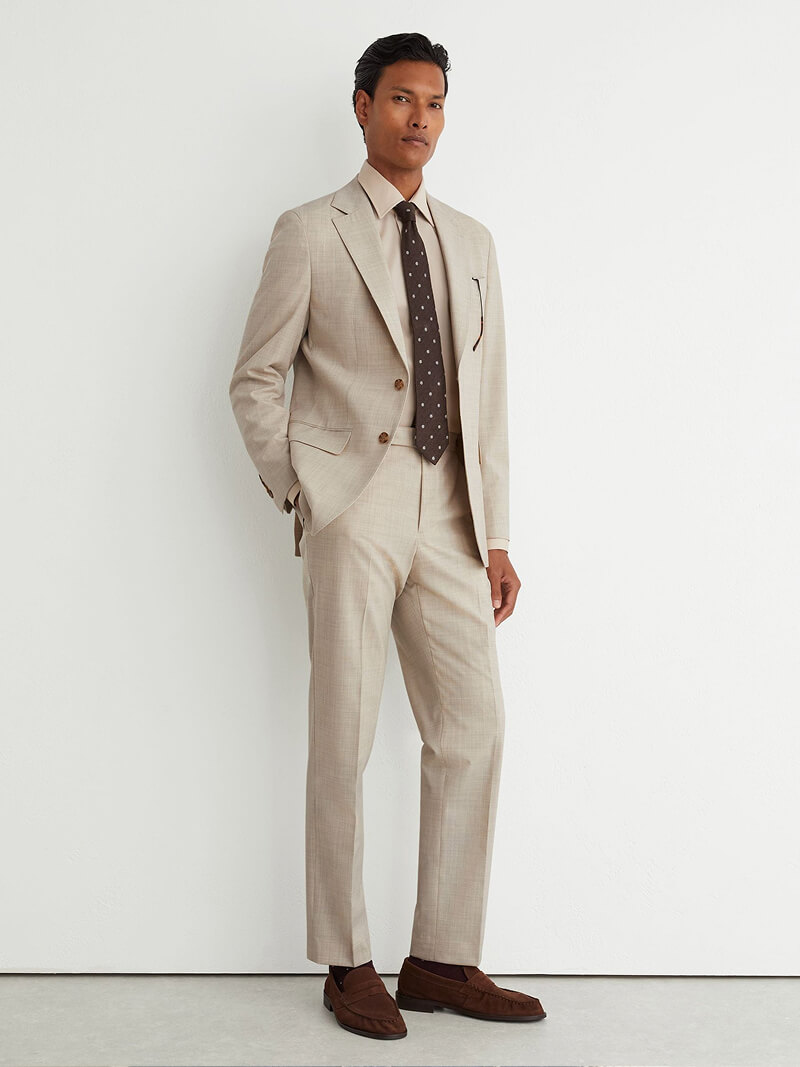
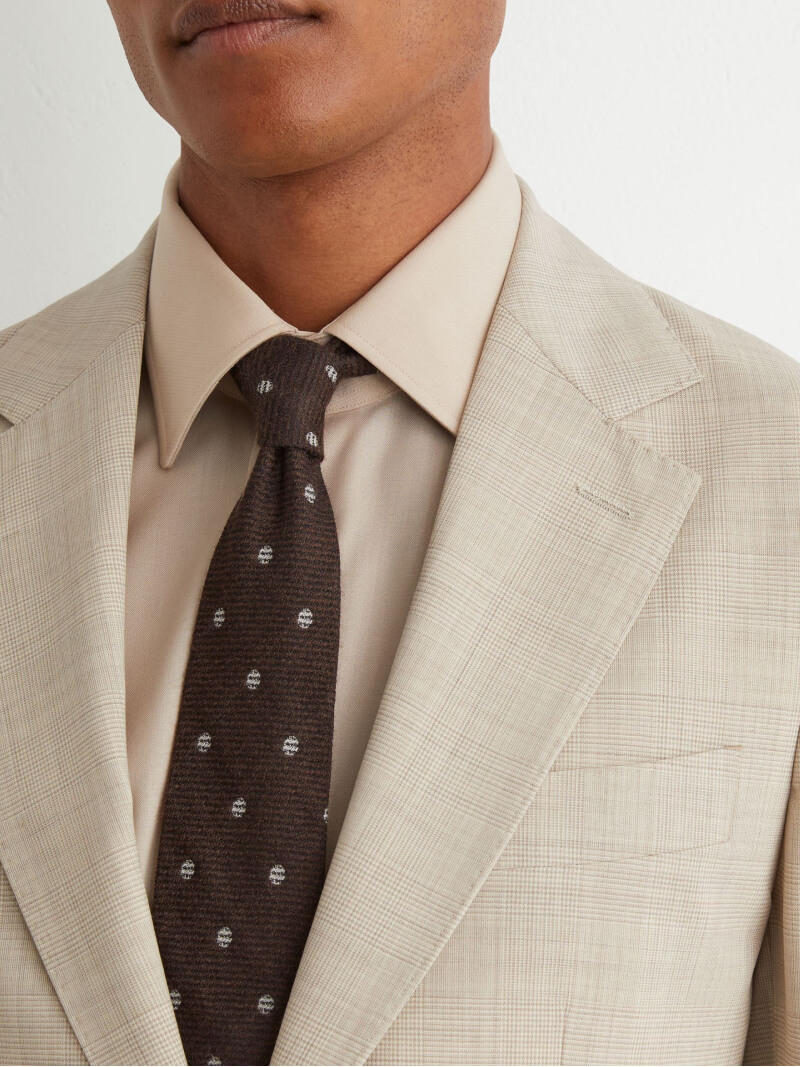
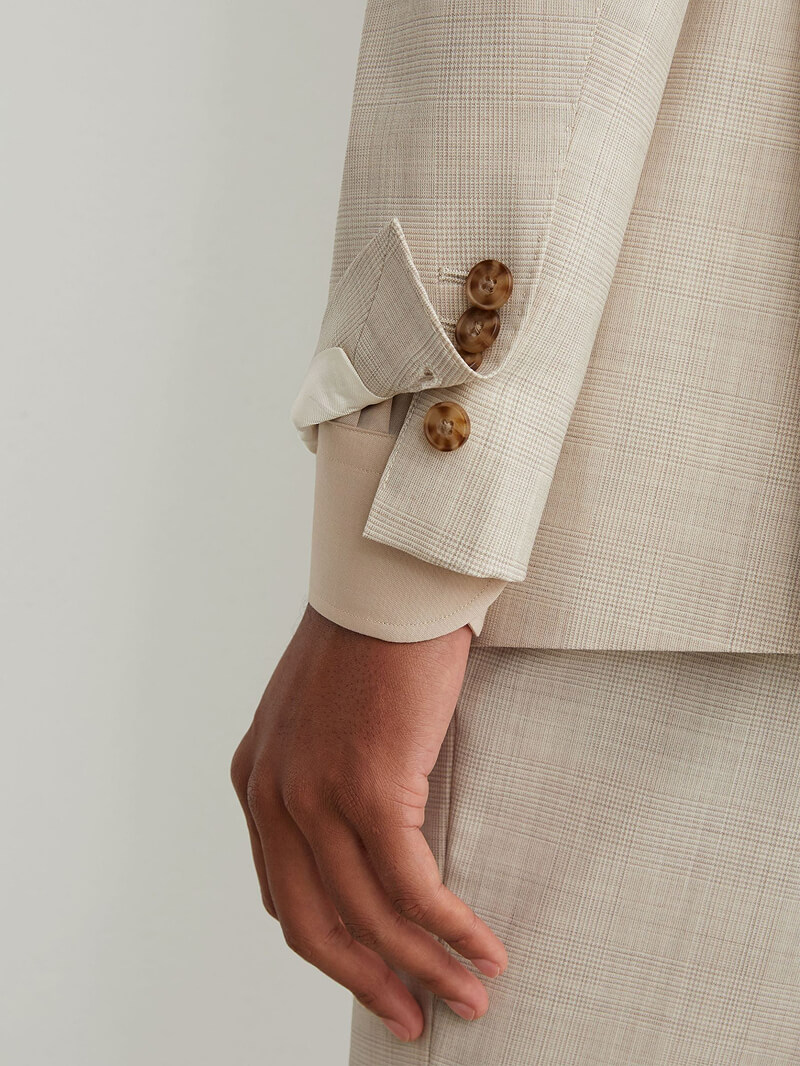
SO TRAGEN SIE EINEN ANZUG
Beim Stylen eines Anzugs kommt es vor allem auf Anpassungsfähigkeit an. So können Sie ganz einfach von formellen Anlässen zu entspannten Wochenendplänen wechseln, indem Sie einfach die Kleidung darunter wechseln. Dabei geht es weniger um strenge Dresscodes als vielmehr darum, einen stimmigen, aussagekräftigen Look zu kreieren.
Core Pairings
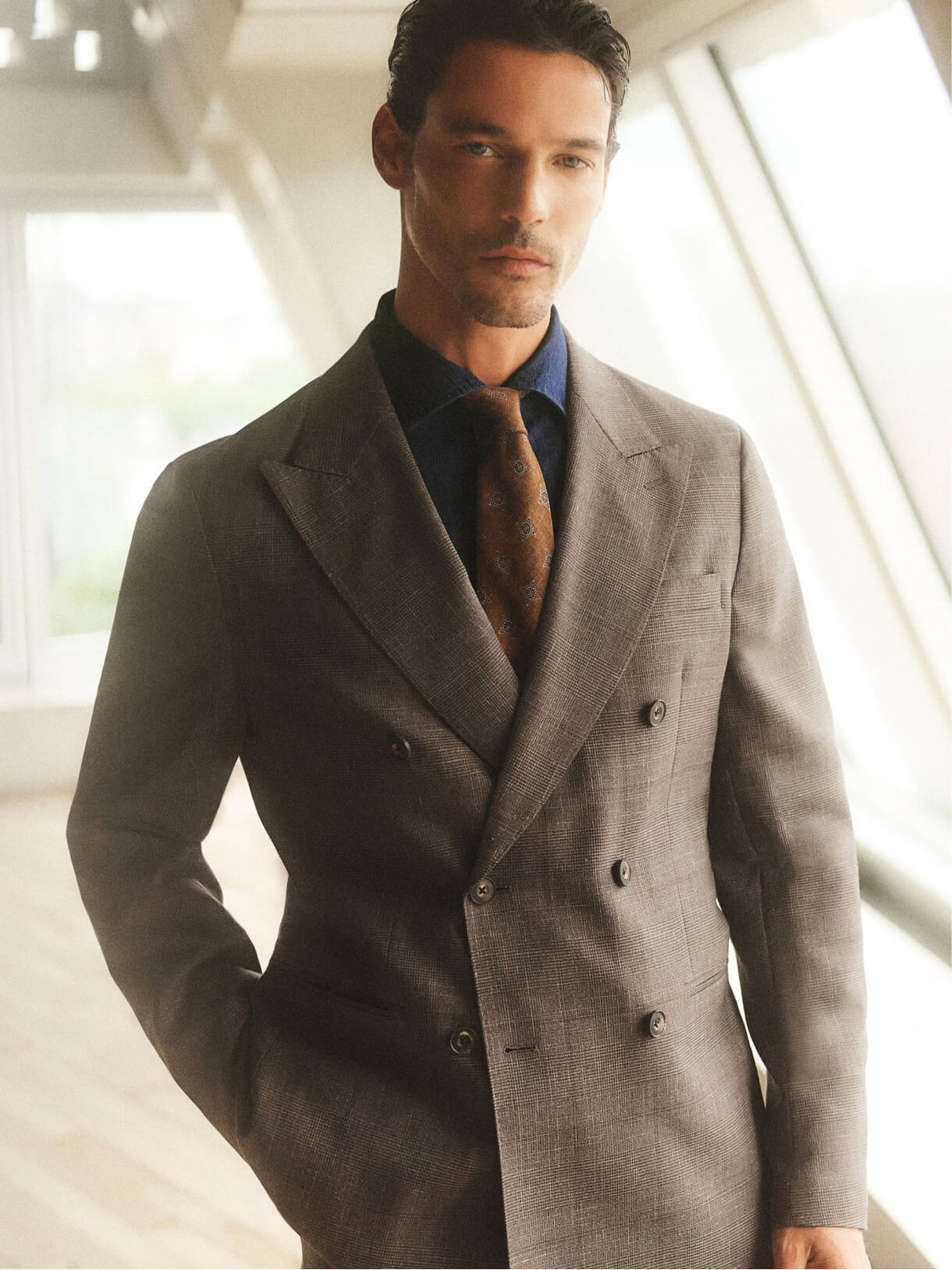
Für klassische Maßanfertigungen können Sie mit einem knackigen Hemd aus Baumwollpopeline und einer Seidenbindung nichts falsch machen. Um den Look zu modernisieren, tauschen Sie das Shirt gegen einen Rundhalsausschnitt aus feiner Merinowolle oder ein raffiniertes Strickpolo aus — das macht die Ästhetik sofort weicher und betont sie gleichzeitig.
Smart Layering
Wenn sich die Jahreszeiten verändern, sollten Sie Schichten in Betracht ziehen. Eine leichte Weste sorgt für einen traditionellen Touch, während ein schmaler Rollkragenpullover unter einem Flanellanzug eine elegante, minimalistische Alternative für kühlere Tage bietet.
Footwear und Accessoires
Ihre Schuhauswahl gibt den Ton an. Ein Leder-Oxford wirkt streng professionell, ein polierter Loafer verleiht einen entspannten europäischen Touch, und ein sauberer, minimalistischer Leder-Sportschuh erdet den Anzug für ein zeitgenössisches, Smart Casual Umfeld.
Farbkoordination
Halten Sie Ihre Farbpalette bedacht. Kombinieren Sie tonale Farben (wie einen marineblauen Anzug mit einem weichen blauen Strick) für einen dezenten, modernen Look. Wenn Sie verschiedene Farben kombinieren, achten Sie darauf, dass Ihre Accessoires und Footwear den Stoff Ihres Anzugs ergänzen und nicht mit ihm konkurrieren.
Durch das Experimentieren mit Texturen und Lagen lässt sich ein einzelner Anzug mühelos vom Sitzungssaal bis zu einem Dinnerdate kombinieren und erweist sich als das vielseitigste Accessoire in Ihrer Garderobe.
WIE MAN EINEN ANZUG WÄHLT
Die Suche nach dem perfekten Anzug hängt von drei Elementen ab: Passform, Material und Funktion.
Passform
Die Jacke sollte flach anliegen und die Naht genau dort enden, wo Ihre Natur Schulter endet. Wenn es Ihnen über die Schulter fällt, ist es zu groß; wenn es sich bündelt, ist es zu klein. Wenn die Jacke zugeknöpft ist, sollte es Ihnen leicht fallen, mit der flachen Hand zwischen Brust und Jacke hindurchzugreifen. Zum Schluss, wenn Ihre Arme entspannt an den Seiten hängen, sollte der Saum bis zur Mitte Ihrer Handfläche reichen. Die Hose sollte gerade die Oberseite Ihres Schuhs berühren und eine leichte Falte aufweisen.
Stoff
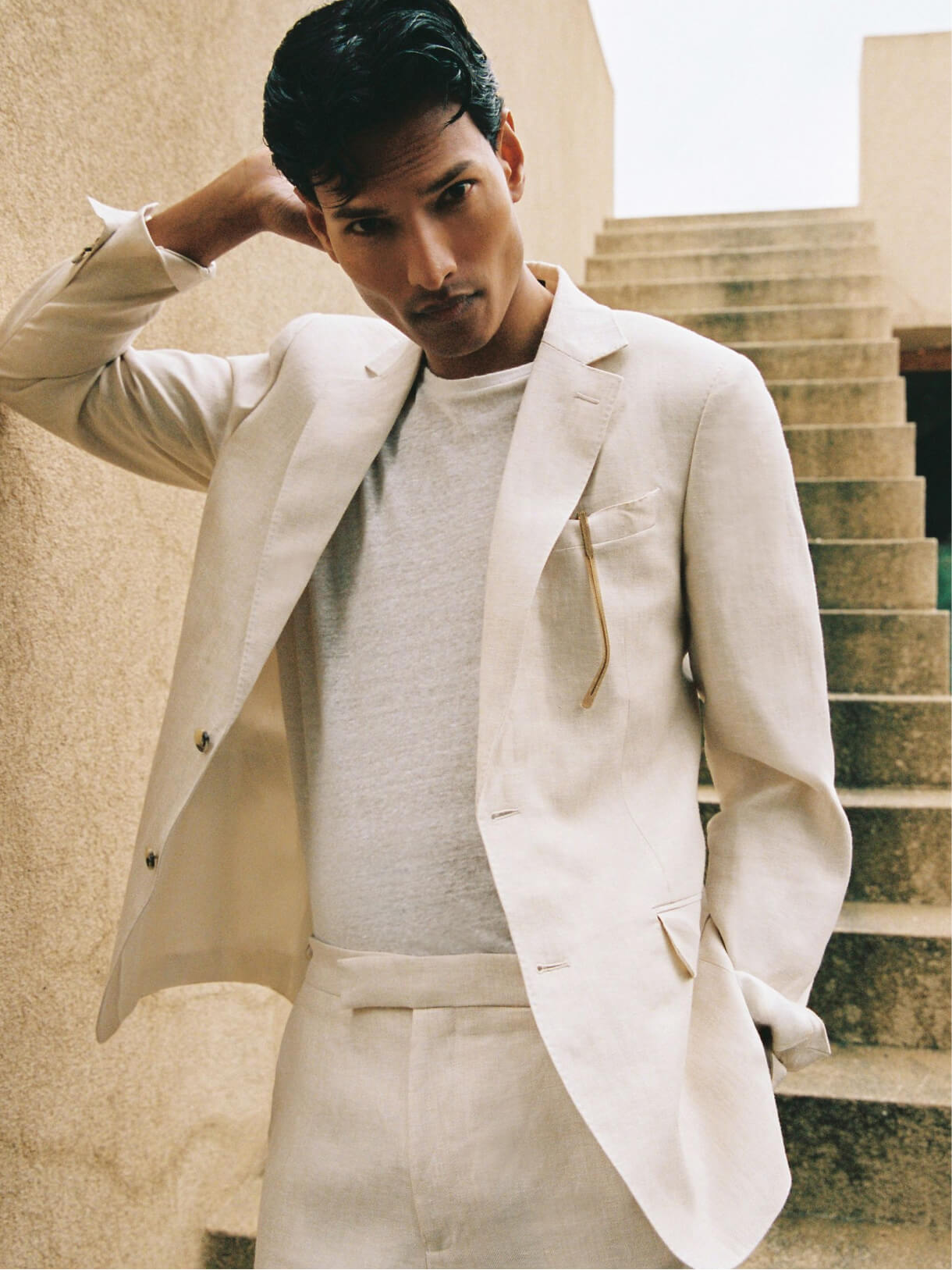
Komfort ist der Schlüssel. Wolle ist der zeitlose Champion für das ganze Jahr. Sie atmet gut, behält ihre Form und sieht immer hochwertig aus. Für sommerliche Anlässe sind Anzüge aus Leinen oder Baumwolle eine kluge, leichte Wahl. Sie knittern leicht, aber gerade dieser lässige Look macht ihren Charme aus.
Funktion
Passen Sie Ihren Anzug für besondere Anlässe an. Ein Anzug (passende Jacke und Hose) ist ideal fürs Office oder besondere Anlässe. Es kann einreihig oder zweireihig sein. Ein einreihiger Anzug hat einen oder zwei Knöpfe auf der Vorderseite und ist der ultimative Klassiker. Ein zweireihiger Anzug zeichnet sich durch einen breiteren, überlappenden Vorderverschluss und zwei Reihen paralleler Knöpfe aus und bietet so einen markanteren, aber dennoch traditionellen Look. Bewahren Sie Smokings und Morgenanzüge für ultraformelle Veranstaltungen auf.
Bei Farben kann man mit Marineblau und Anthrazitgrau aufgrund ihrer Vielseitigkeit nichts falsch machen. Schwarz eignet sich hervorragend für Schwarz-Bindung-Veranstaltungen, kann aber für den Alltag zu hart sein.
WIE TRÄGT MAN EINEN SMOKING
Wenn die Einladung es verlangt, ist ein Smoking das ultimative Stilstatement. Streng reserviert für Hochzeiten, Abend- und Schwarz-Bindung-Veranstaltungen ist das charakteristische Merkmal des Smoking-Anzugs ein Satin- oder Grosgrain-Detail an den Revers und Knöpfen der Jacke, kombiniert mit passenden Hosen, die dasselbe Detail an den Außennähten aufweisen.
Dazu sollte man ein weißes Smokinghemd, eine Bow-Bindung und einen Kummerbund tragen, um den Hosenbund zu verdecken. Komplettieren Sie den Look mit schwarzen Lackleder-Oxfords oder Loafern und schwarzen Kleidsocken. - Beim Hinsetzen sollte keine Haut sichtbar sein. Der Teufel steckt im Detail: Manschettenknöpfe und Hemdstecker nicht vergessen.
SO TRAGEN SIE HOCHZEITSANZÜGE
Ob Bräutigam oder Gast, ein Hochzeitsanzug bietet die Möglichkeit, den eigenen Stil zur Schau zu stellen, mit Farben zu experimentieren und einen Stil zu finden, der zum Veranstaltungsort passt. Sommerhochzeiten Home oder im Ausland sind der perfekte Rahmen für einen Leinenanzug in helleren Farbtönen.
Ein Tailored zwei- oder drei-Pieces-Wollanzug in sattem Marineblau oder Anthrazit eignet sich hingegen hervorragend für kirchliche Zeremonien im Herbst und Winter. Dabei gilt: Je formeller der Anlass, umso klassischer sollte der Look sein. Erwägen Sie Details wie ein Revers, eine Weste und Einstecktücher, die den Look aufwerten - insbesondere für den Bräutigam und die Trauzeugen. Für einen Look, der perfekt gepflegt wirkt, sollten Schuhe und Gürtel stets farblich aufeinander abgestimmt sein.
Wie man Anzüge für Kleidung fürs Büro trägt
Die Rolle des Anzugs im Office hat sich im Laufe der Jahre weiterentwickelt, mit moderneren Varianten, doch er bleibt ein professionelles Mittel, um einen guten ersten Eindruck zu hinterlassen.
Bleiben Sie klassisch, der Arbeitsplatz ist nicht der Ort für kräftige, auffällige Farben. Stattdessen denken Sie an Anzüge in Marineblau und Grautönen, die das ganze Jahr über für Präsentationen, Besprechungen und Vorstellungsgespräche geeignet sind. Wählen Sie Stoffe, die für ganztägige Aktivitäten gemacht sind, vom Weg zur Arbeit bis hin zum langen Sitzen am Schreibtisch, wie zum Beispiel Wolle, die von Natur aus knitterarm ist.
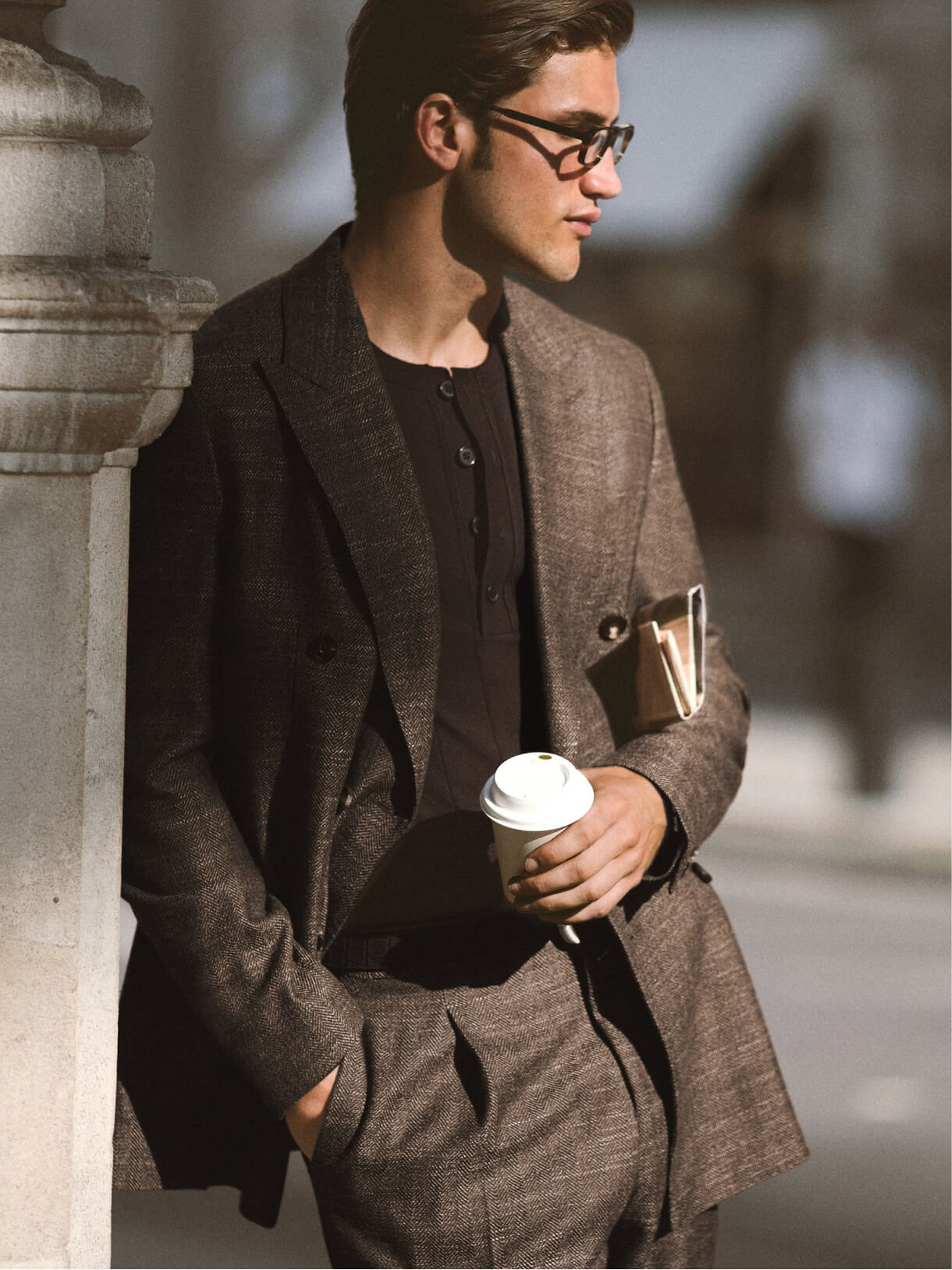
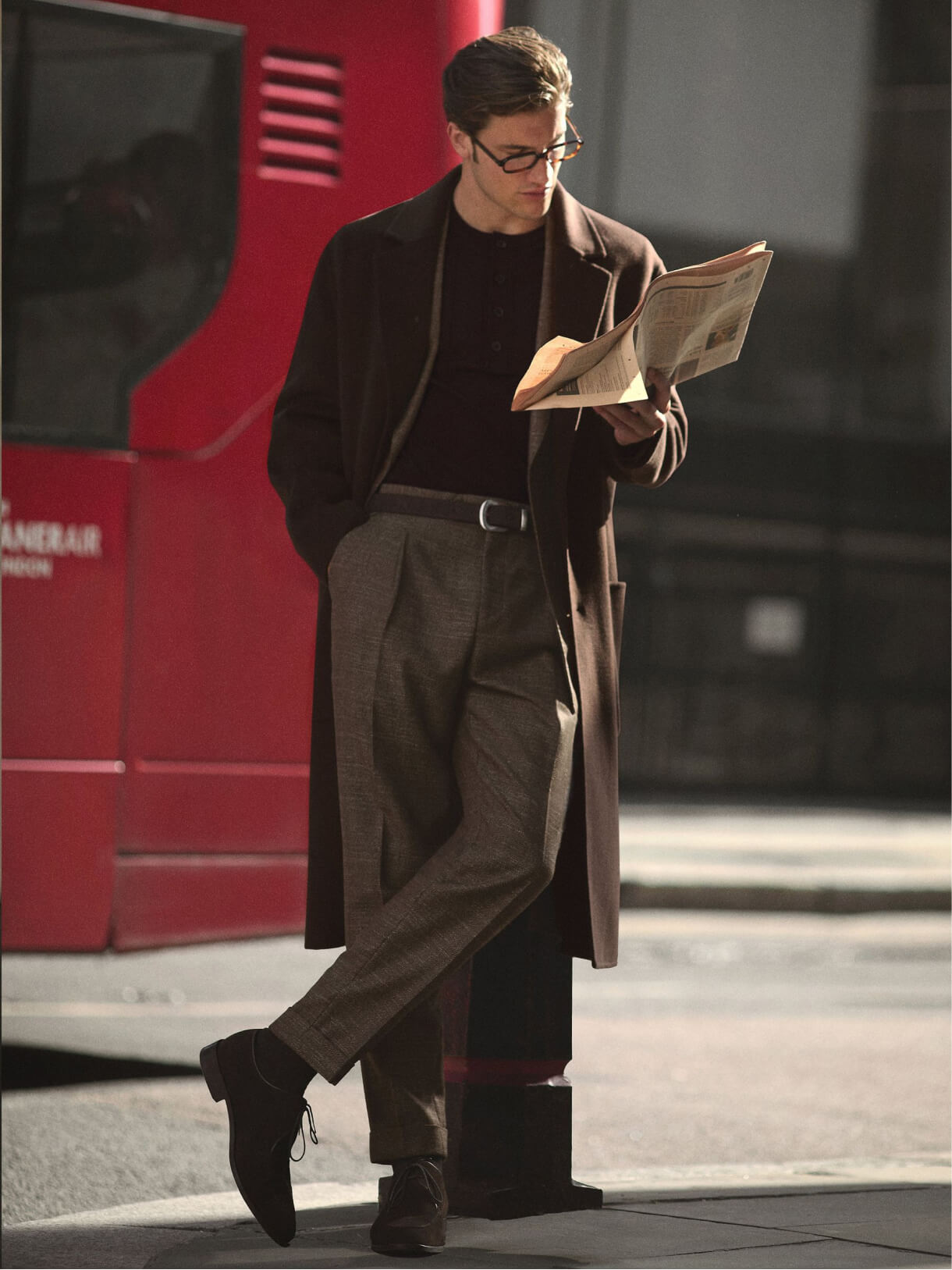
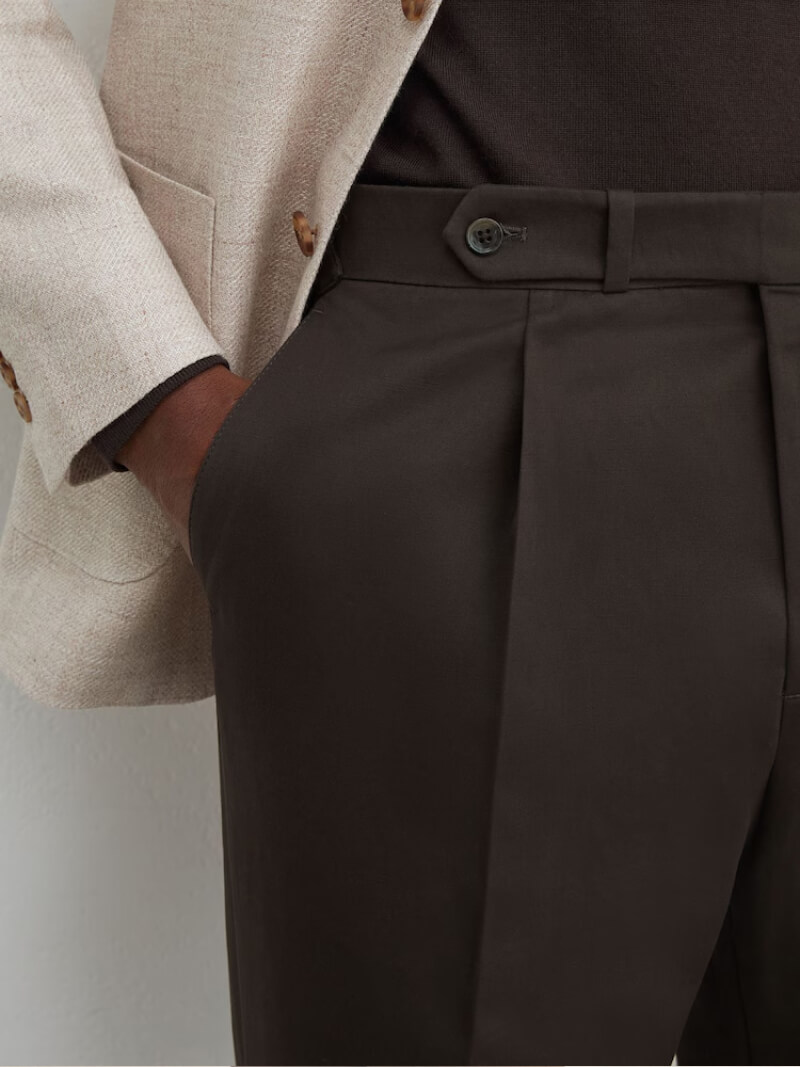
In verschiedenen Office gelten unterschiedliche Formalitätsgrade. In einem modernen Office kann man unter Umständen auf die Bindung verzichten und stattdessen ein Hemd gegen ein klassisches Polohemd oder einen fein gestrickten Pullover für einen mehrlagigen Look tauschen. Chinohosen mit Anzugjacke sind eine großartige Option für entspannte Tage, ergänzt durch ein schickes Paar Schuhe. Unterdessen werden in formelleren Büros Kleidhemden, Oxford-Schuhe und eine Seidenbindung in Juwelentönen oder mit dezentem Print verlangt.
Style-Tipps
Anzugfarben
Wählen Sie Ihre Farbe dem Kontext entsprechend. Berücksichtigen Sie die Jahreszeit, die Umgebung und Ihren Hautton. Grautöne und Marineblau sind klassisch und funktionieren in den meisten Situationen. Schwarz ist abends zeitlos, tagsüber aber nicht so vielseitig. Hellere Monate verlangen hellere Farbtöne wie Tan, Khaki und Stone, während die winterliche Jahreszeit reichere, schwerere und dunklere Farben bietet.
Kombinationen mit Anzug und Hemd
Mit einem frischen weißen Hemd kann man in den meisten Lebenslagen nie etwas falsch machen. Scheuen Sie sich aber nicht, einen Materialmix aus Farbkombinationen wie Hellblau und Grau oder Marineblau mit Pink für ein auffälligeres Outfit zu erstellen. Bei Prints sollten Sie immer einen Teil des Outfits schlicht halten. Zum Beispiel ein weißes Hemd in Kombination mit einem Nadelstreifenanzug oder ein einfarbiger Anzug in Kombination mit einem gestreiften Hemd.
Bindung-Styling
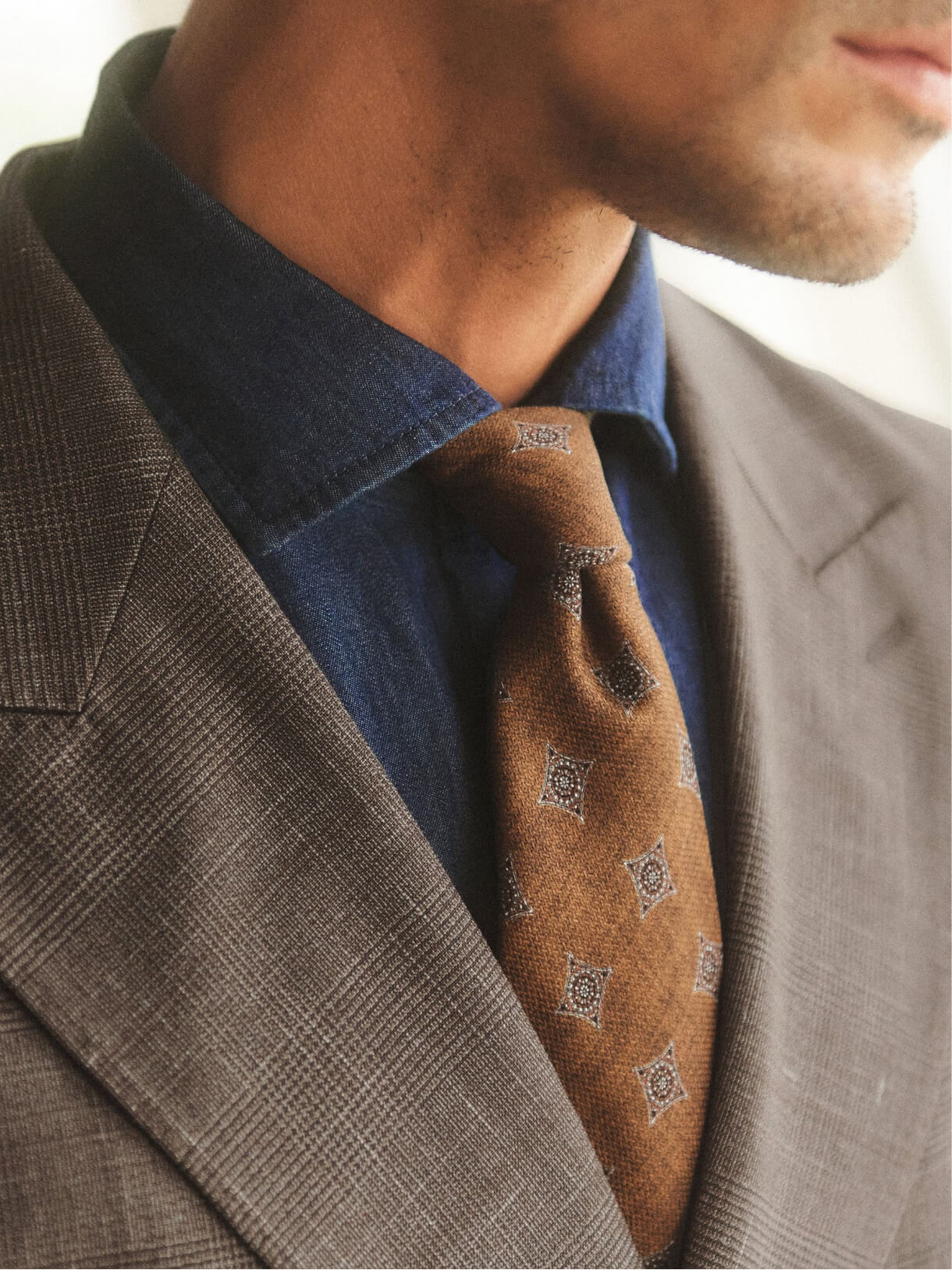
Die Wahl Ihrer Bindung ist wichtig. Es ist der Blickfang Ihres Outfits und der Punkt, auf den der Blick ganz natürlich gelenkt wird. Viel Spaß mit Prints und Mustern, aber achten Sie auf die Skala. Kombinieren Sie ein Hemd mit größerem Print mit einer Bindung mit kleinerem Print und umgekehrt. Das Gleiche gilt für Stoffe, kombinieren Sie glatte Seidenkrawatten mit weichen Baumwollhemden und genießen Sie in den kälteren Monaten Strickkrawatten und Leinen, wenn es wärmer wird. Bei der Farbwahl ist ein harmonischer Ton-in-Ton-Look immer eine gute Wahl. Alternativ können Sie dunklere, intensive Farben mit klassischer, einfarbiger Kleidung zu einem Materialmix kombinieren.
Einstecktücher
Mit Ihrem Einstecktuch zeigen Sie sich von Ihrer Persönlichkeit. Ein Farbtupfer oder ein Print hebt sich von einem klassischen, einfarbigen Anzug ab. Die goldene Regel lautet, dass Sie niemals Ihre Bindung und Ihr Einstecktuch kombinieren sollten. - Sie sollten sich ergänzen. Wie bei Bindung: Wechseln Sie Ihre Stoffe mit den Jahreszeiten.
Krawattennadeln und Accessoires
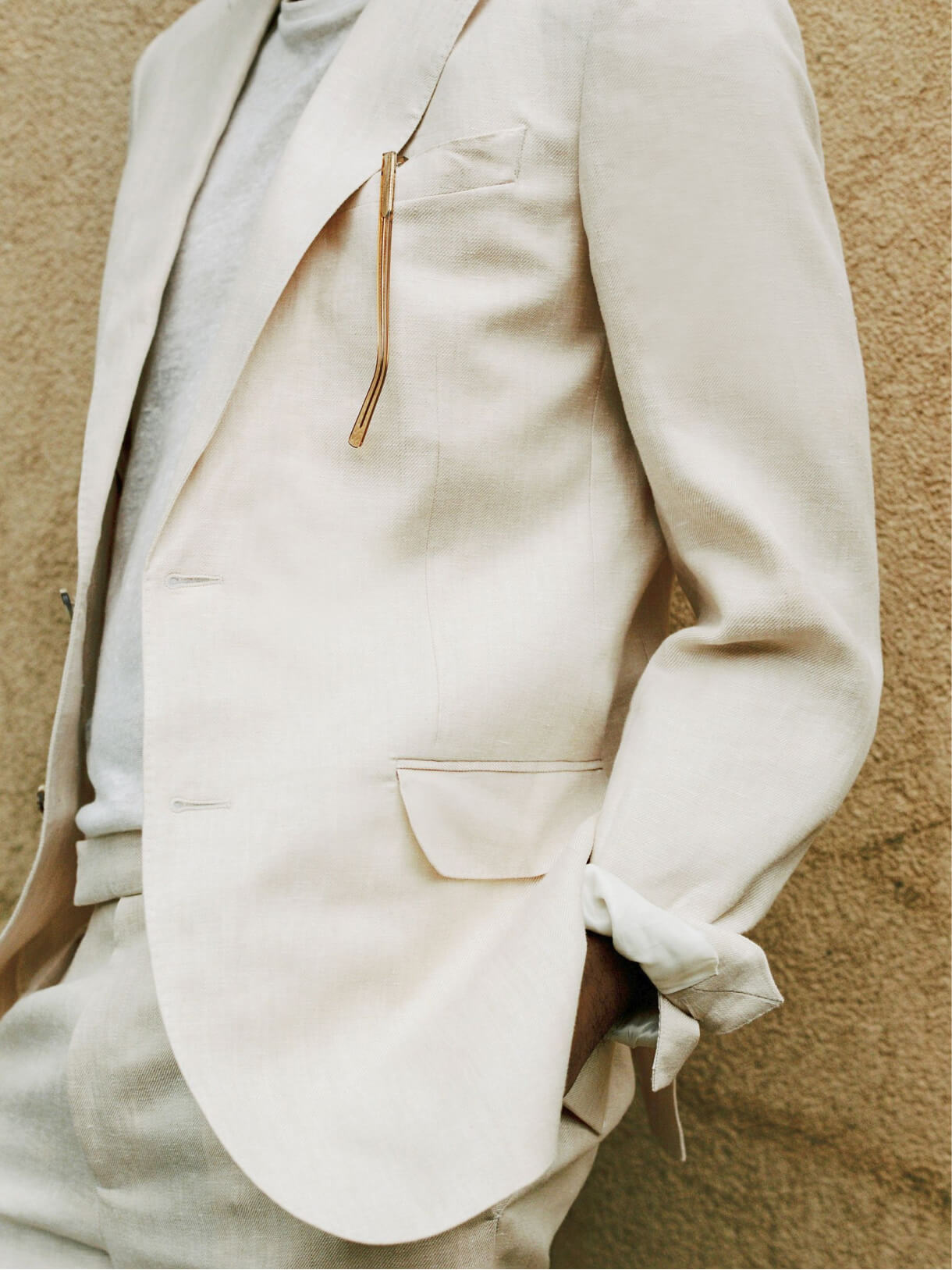
Es ist wichtig, auf die Details zu achten. Eine gut platzierte Krawattennadel, passende Manschettenknöpfe und Hemdknöpfe unterstreichen Ihren Look. Achten Sie darauf, dass die Metalle immer harmonieren, und denken Sie daran: Weniger ist immer mehr.
Footwear
Vergessen Sie Ihre Füße nicht; die richtigen Schuhe runden Ihren Look ab. Der Oxford ist die formellste Option und in Unternehmenskontexten, bei Veranstaltungen mit schwarzer Bindung und Vorstellungsgesprächen unverzichtbar. Loafers bieten einen legeren und etwas moderneren Look, der sich perfekt für Hochzeiten und modernere Büros eignet.
Smart Casual vs formelles Styling
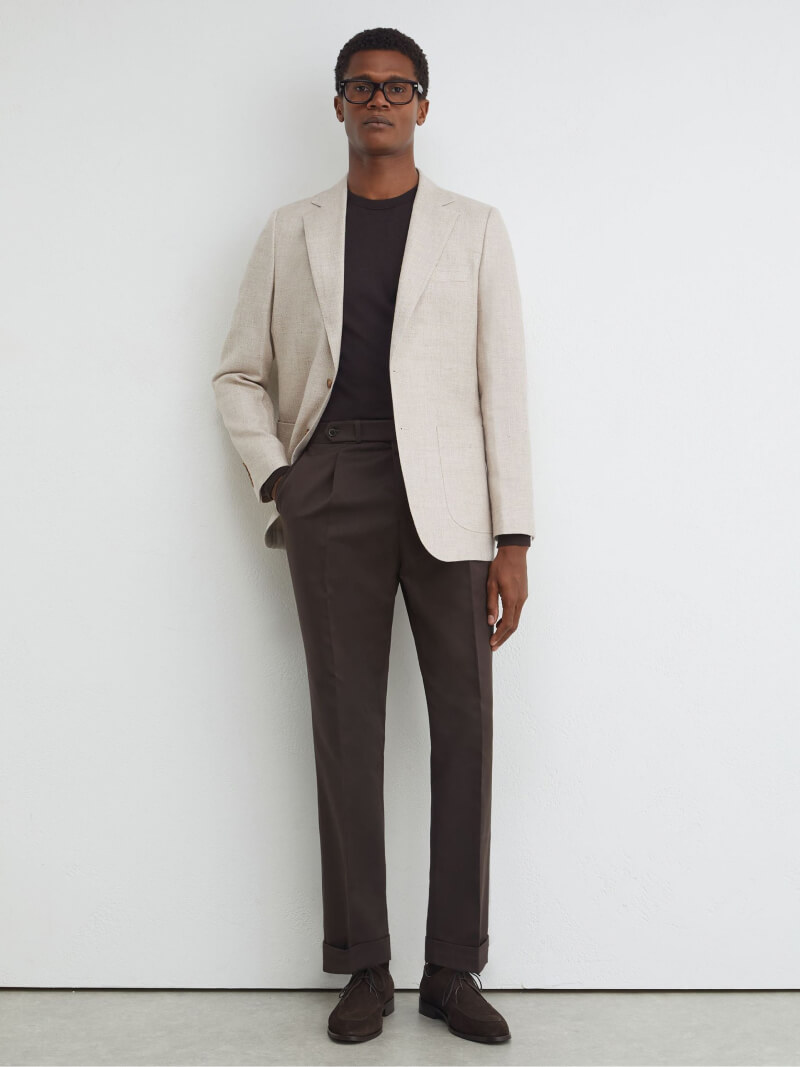
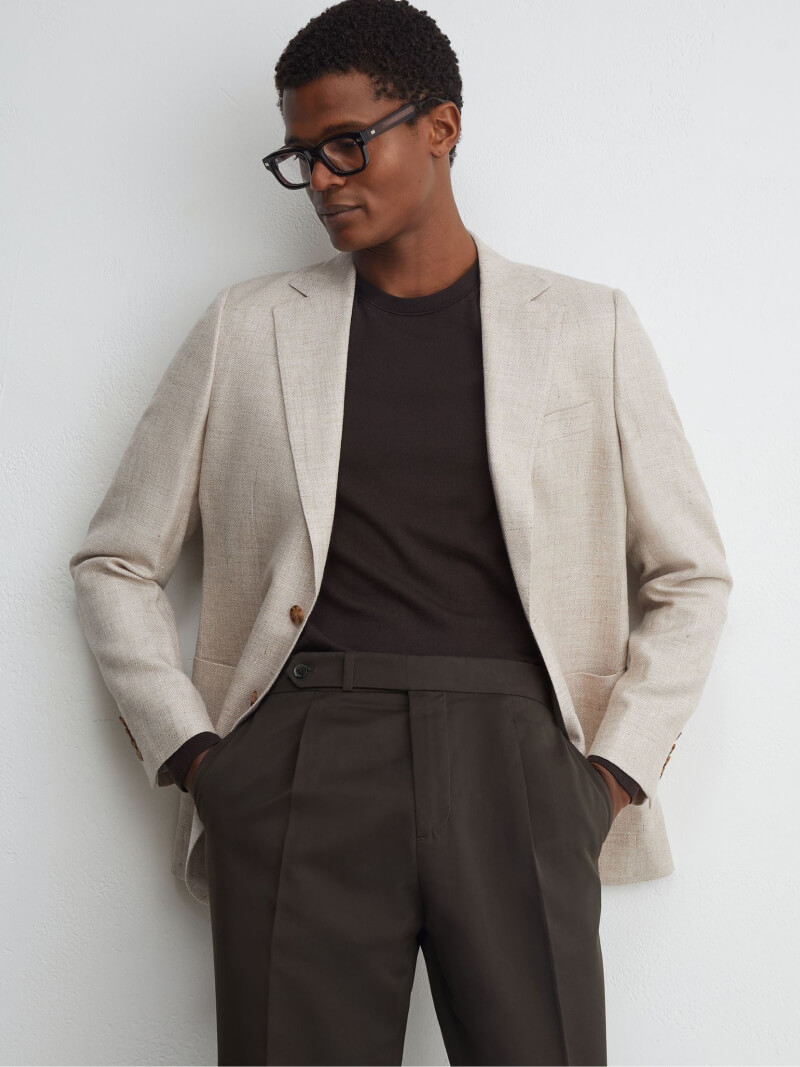
Den Unterschied zwischen Smart Casual und formellem Styling zu verstehen, ist entscheidend. Formelle Kleidung ist traditioneller und folgt einem einheitlichen Ansatz: Der Zweiteiler-Anzug passt zusammen, das Hemd ist knackig, die Bindung und das Einstecktuch sind aus Seide, und die Schuhe sind aus elegantem Leder oder Lackleder. Andererseits ermöglicht ein Smart Casual-Kleidcode mehr Persönlichkeit und die Freiheit zum Materialmix und Kombinieren. Kombinieren Sie Chinohose mit einem Sharp Blazer oder stylen Sie Ihre Anzughose mit einem feinen Pullover oder einem Poloshirt. Es benötigt deutlich weniger Accessoires, sodass Sie steife Schuhe gegen bequeme Loafers oder Chelsea-Stiefel tauschen können.